
Vertical and horizontal form-fill-seal machines are not interchangeable. The right choice depends on your product, pack format and throughput. This guide explains how each works, their strengths and limits, and how to decide between VFFS and HFFS.
Form-fill-seal (FFS) machines are the workhorses of modern packaging. They take a flat roll of film, form it into a pouch or bag, fill it with product and seal it — all in one continuous, automated process. The category splits into two architectures that look similar on a spec sheet but behave very differently in practice: vertical (VFFS) and horizontal (HFFS).
Choosing the wrong one is an expensive mistake, because the orientation of the machine dictates which products and formats it can run well. This guide explains how each works, where each excels, and a simple framework for deciding which fits your product.
What form-fill-seal means
In any FFS machine, film unwinds from a reel, a forming shoulder or plate shapes it into a tube or pouch, vertical and horizontal seals are made, the product is dosed in, and the final seal closes the pack — which is then cut off and discharged. Doing all of this in one machine is what makes FFS so efficient compared with using pre-made pouches.
The defining difference between the two types is the direction in which the pack is formed and filled. That single factor changes how product enters the pack, which in turn decides what each machine is good at.
Vertical form-fill-seal (VFFS)
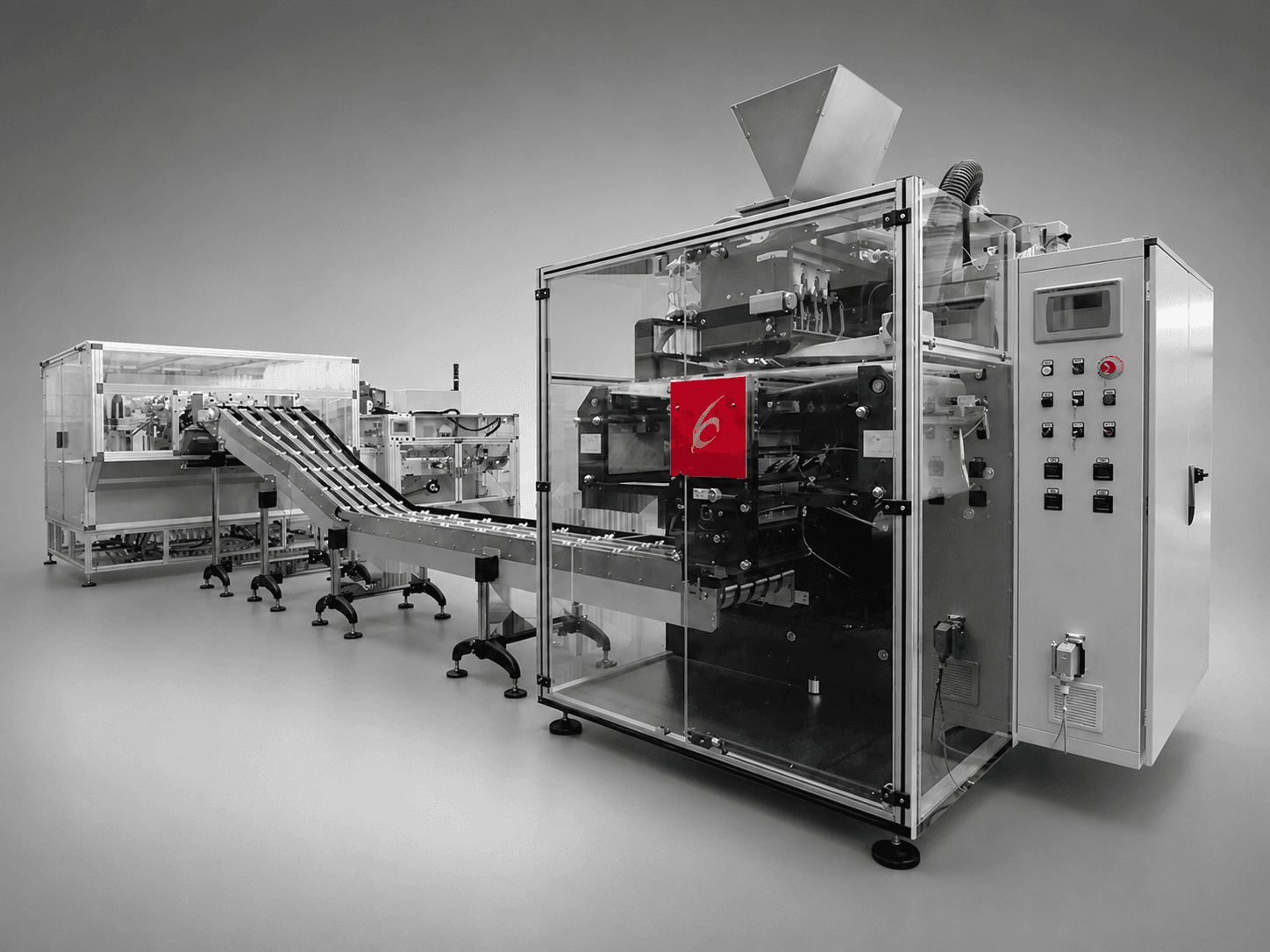
In a VFFS machine the film is formed into a vertical tube and the product drops into it by gravity, usually fed from a multihead weigher, auger or volumetric filler mounted above. The machine then seals and cuts the pack at the bottom.
VFFS excels with free-flowing products — snacks, granules, powders, grains, pulses, frozen pieces and pet food — at high speed. It produces pillow packs, gusseted bags and (with the right kit) stand-up and quad-seal pouches, and it does so with a compact footprint because the whole process stacks vertically. For high-volume dry products in bag formats, VFFS is usually the most cost-effective choice.
Horizontal form-fill-seal (HFFS)
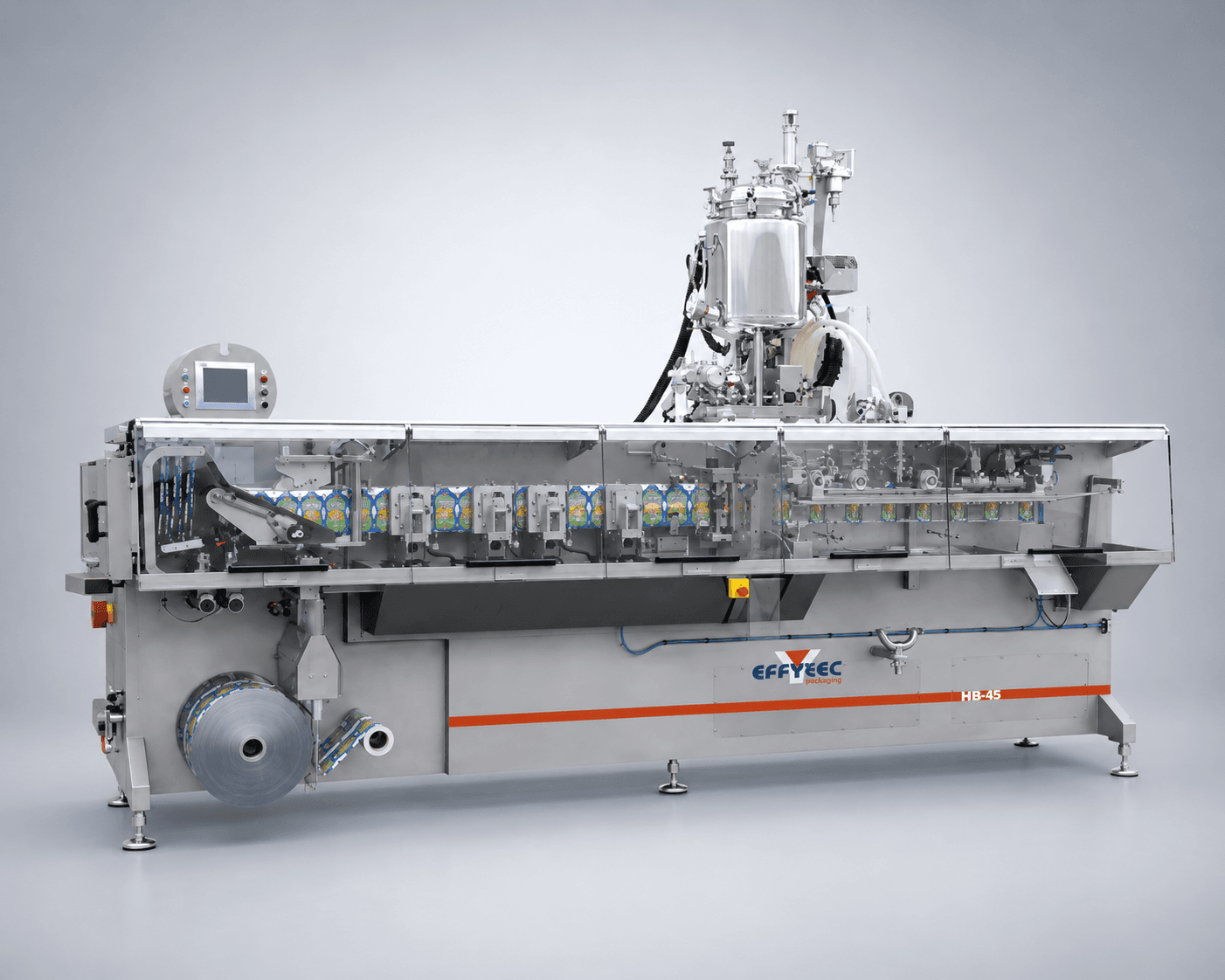
In an HFFS machine, pouches are formed and filled lying flat as they move horizontally through the machine — either from a roll of film or from pre-made pouches in a pouch-handling (pick-fill-seal) version. Because the pack is filled while horizontal and supported, product can be placed rather than dropped.
That makes HFFS the better choice for premium and complex formats: shaped pouches, spouted pouches, ziplock and resealable packs, and products that need careful handling — wet items, delicate pieces, or multiple components placed into one pack. HFFS lines like the Effytec HB Series run shaped, spouted and ziplock pouches at up to 320 packs per minute, which is why they dominate premium food, beverage and personal-care packaging.
VFFS vs HFFS: head to head
Product: VFFS suits free-flowing dry products dropped by gravity; HFFS suits liquids, wet products, delicate items and anything that must be placed precisely. Format: VFFS owns pillow and gusseted bags; HFFS owns shaped, spouted, ziplock and stand-up pouches. Speed: both can be very fast, but VFFS tends to lead on simple high-volume bags while HFFS leads on complex premium pouches.
Footprint and cost: VFFS is generally more compact and lower cost for equivalent simple output, while HFFS commands a premium for the formats and handling it enables. Neither is universally 'better' — they are tools for different jobs, and many plants run both.
How to decide
Work in this order. First, fix the pack format your market expects — that alone often makes the decision. If you need a pillow or gusseted bag of a free-flowing product, VFFS. If you need a premium stand-up, spouted or ziplock pouch, HFFS. Second, consider the product's behaviour: gravity-droppable and free-flowing leans VFFS; wet, delicate or placed leans HFFS. Third, weigh volume and budget.
By industry, VFFS dominates snacks, spices, grains and pet food; HFFS dominates premium beverages, sauces, personal care and pharmaceutical pouches. If your roadmap spans both, talk to a supplier who offers both so the recommendation is driven by your product rather than by what they happen to stock.
The verdict
VFFS and HFFS are complementary, not competing. Choose VFFS for free-flowing products in bag formats at high volume, and HFFS for premium, shaped or resealable pouches and products that need careful handling. Share your product and target pack format with our team and we'll recommend the right architecture — and demonstrate it on your own product before you commit.
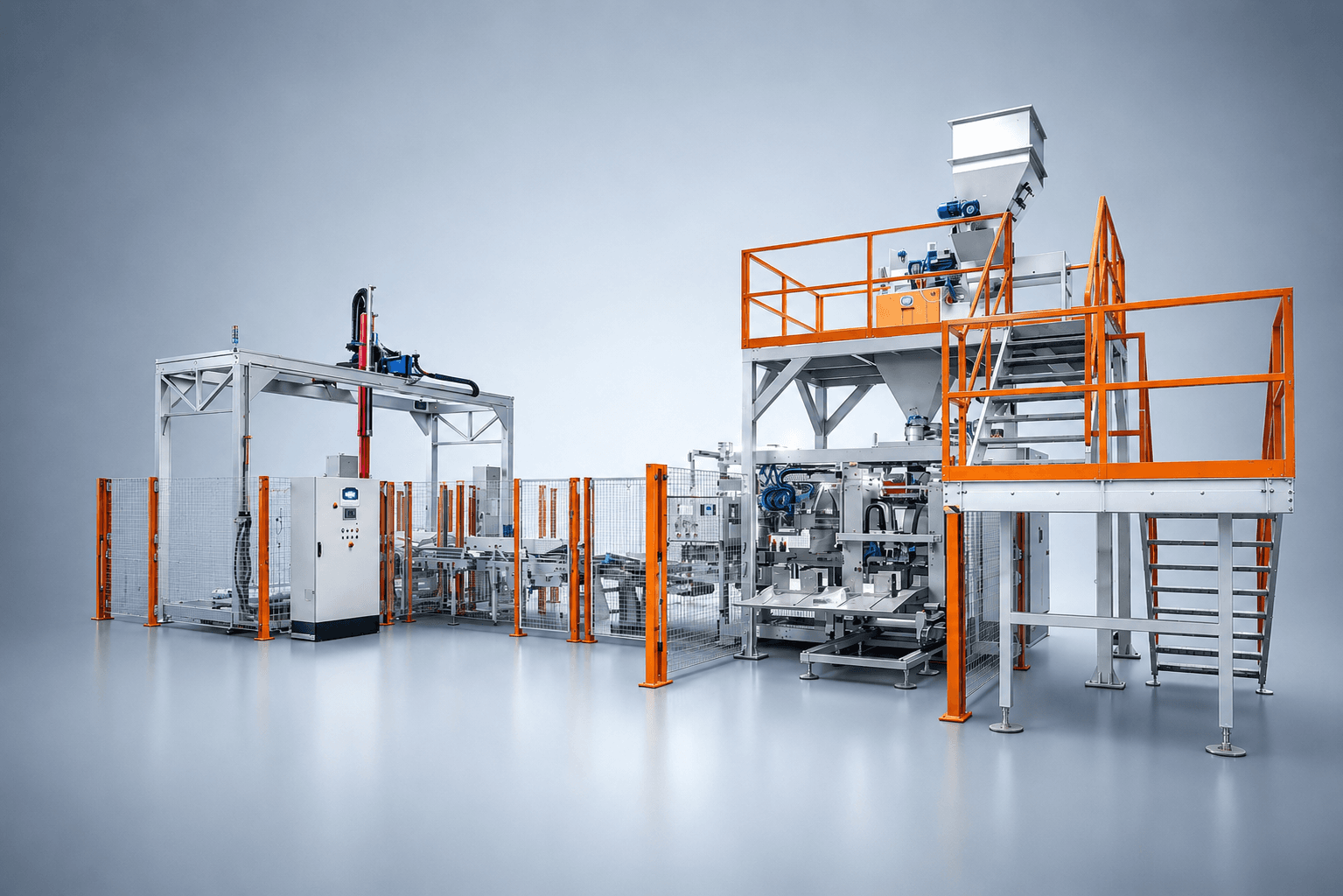
The systems referenced in this article, supplied and serviced from Ahmedabad.
Frequently asked questions
What is the difference between VFFS and HFFS?
VFFS (vertical form-fill-seal) forms a vertical tube of film and drops product in by gravity — ideal for free-flowing products in pillow and gusseted bags. HFFS (horizontal form-fill-seal) forms and fills pouches lying flat, so product can be placed precisely — ideal for shaped, spouted and ziplock pouches and delicate or wet products.
Which is faster, VFFS or HFFS?
Both can run at high speed. VFFS typically leads on simple, high-volume bag formats of dry product, while HFFS leads on complex premium pouches — for example, HFFS lines can run shaped, spouted and ziplock pouches at up to 320 packs per minute.
Can one machine do both VFFS and HFFS?
No — they are different architectures. The choice is driven by your pack format and product. Many plants run both types for different products. Start by fixing the pack format your market expects, then match the machine to it.

