
A packaging machine shapes your line's speed, quality and running cost for years. This guide walks through the seven decisions that matter most — product, pack format, dosing, throughput, changeover, inspection and total cost of ownership — so you invest in the right system the first time.
Choosing a packaging machine is one of the highest-leverage capital decisions a manufacturer makes. Get it right and the machine quietly pays for itself in throughput, reduced giveaway and fewer rejects for a decade. Get it wrong and you inherit a bottleneck that constrains every shift, every product launch and every margin conversation for years.
The single biggest mistake buyers make is starting with the machine. They see an impressive line at a trade show or in a competitor's plant and reverse-engineer their requirement to fit it. The right order is the opposite: define your product, your pack and your output first, then let those requirements select the machine. This guide covers the seven decisions, in priority order, that determine whether you buy the right system.
1. Start with your product, not the machine
Every packaging machine is ultimately a product-handling machine, and products behave very differently. Free-flowing powders, sticky pastes, aerated snacks, abrasive granules, hot-fill liquids and fragile biscuits each impose different demands on dosing, contact materials and handling speed. A machine that runs flawlessly with dry granules can choke on a hygroscopic powder; a filler tuned for thin juice will struggle with a thick sauce.
Before you compare suppliers, document your product's physical behaviour: bulk density, flow characteristics, particle size, temperature, viscosity, abrasiveness and any tendency to bridge, clump or foam. These properties decide which dosing technology fits — auger, volumetric cup, multihead weigher, servo pump or gravity fill — and that choice cascades into every other part of the line.
2. Lock the pack format before you shortlist
Pack format is a commercial decision as much as a technical one, and it constrains machine architecture more than almost anything else. A stand-up pouch with a spout, a three-side-seal sachet, a pillow pack, a rigid bottle and a 25 kg bulk sack each imply a fundamentally different machine. Switching format after you have bought the machine is expensive or impossible.
Decide the format your market expects, then confirm two things with every supplier: the exact size and style range the machine can run, and how quickly it changes over between them. If you sell into multiple formats or sizes, tool-free, repeatable changeover is worth paying for — it is the difference between a line that flexes with demand and one that ties up a shift on every product switch.
3. Match the dosing and filling technology to the product
Dosing accuracy is where product quality, regulatory compliance and profit all meet. Volumetric and cup fillers are fast and economical for consistent free-flowing products. Auger fillers handle fine and aerated powders such as spices and nutraceuticals. Multihead weighers deliver high accuracy on irregular products like snacks, pet kibble and frozen pieces. Servo and gravity fillers suit liquids, with flow-meter or weigh-based control for the tightest tolerances.
The right answer depends on the product you documented in step one. Ask suppliers to demonstrate the machine on your actual product, not a stand-in, and to quote a guaranteed fill accuracy and reject rate. Vedvik's pouch packing and liquid filling lines, for example, are matched to product behaviour rather than sold as a one-size-fits-all box.
4. Size for realistic throughput, not peak rate
Throughput is where buyers most often over- or under-spend. Buying far more speed than you need wastes capital and adds complexity you will maintain forever; buying too little caps your growth and forces a premature second purchase. Size the machine to your realistic volume over the next 18 to 24 months, with sensible headroom — not to a number that flatters a business plan.
Crucially, ask about sustained throughput on your product and pack, not the headline rate quoted on the brochure. Catalogue speeds are usually achieved on ideal product, ideal film and perfect conditions. Real-world output after accounting for changeovers, cleaning and minor stops is the number that actually determines your cost per pack.
5. Plan for changeover and flexibility
Few lines run a single SKU forever. New sizes, new recipes and seasonal products all demand changeovers, and every minute of changeover is lost production. Tool-free format parts, recipe storage on the HMI and quick-release tooling dramatically reduce downtime and the skill required to switch products safely.
If your roadmap includes new formats, choose a platform that can be upgraded — additional filling stations, extra lanes, or modules for ziplock, spout or shaped pouches — rather than one you will outgrow. Flexibility bought up front is far cheaper than a replacement machine later.
6. Build in inspection and compliance
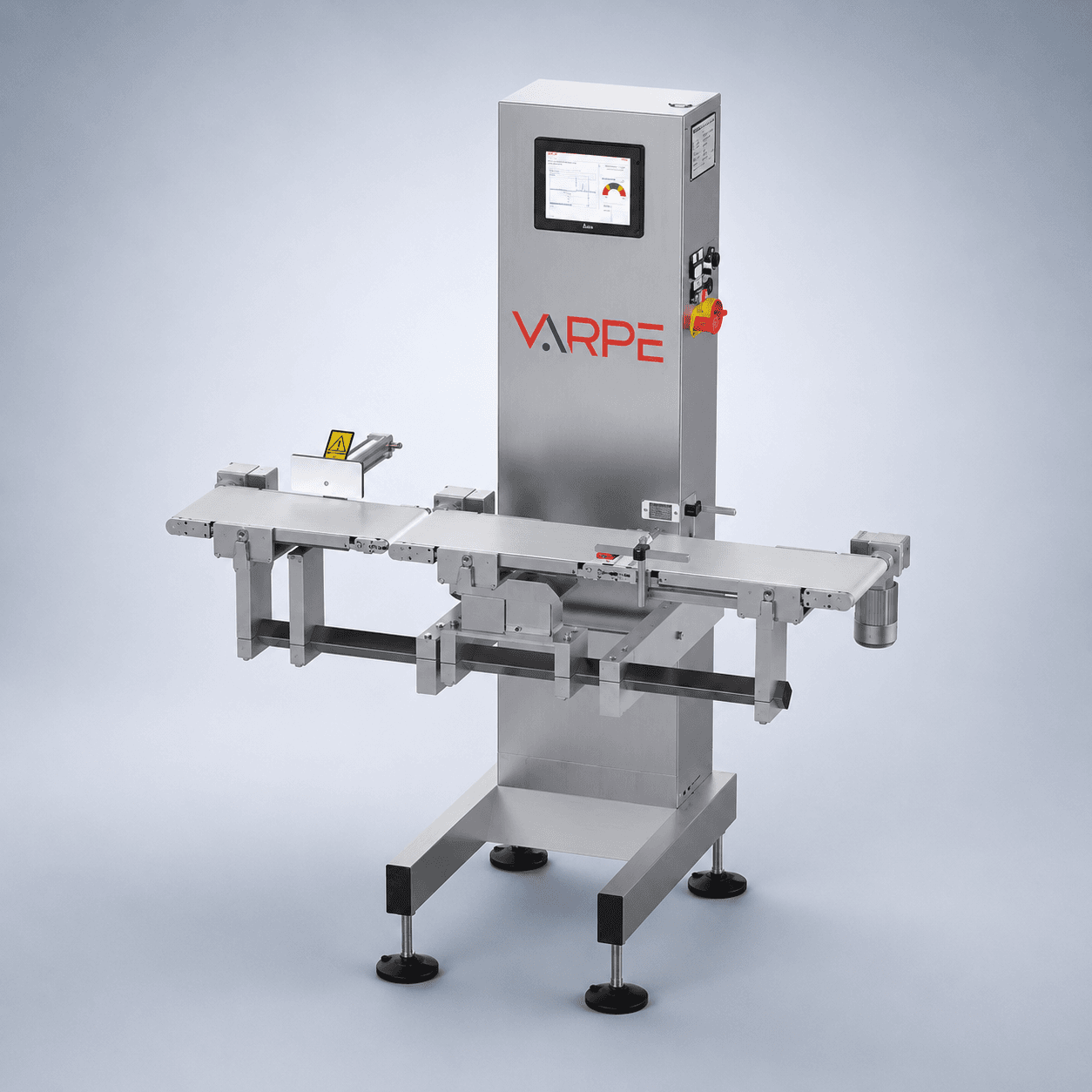
A packaging line that fills accurately but ships non-conforming product is a liability. Inline checkweighing controls both underweight (a legal and reputational risk) and overweight (free product given away on every pack, which compounds quickly at volume). Vision inspection verifies fill level, seal integrity, label placement and code legibility, while X-ray and metal detection protect against foreign bodies.
For regulated sectors — pharmaceuticals, nutraceuticals and export food — inspection and serialisation are not optional extras; they are entry requirements. Specify them at the design stage so they integrate cleanly with the primary machine rather than being bolted on later. A checkweigher pays for itself in giveaway savings alone on most high-volume lines.
7. Weigh total cost of ownership and local support
The purchase price is the smallest part of what a machine costs you. Energy, film and material efficiency, spare-parts availability, mean time between failures and the speed of service support all dwarf the sticker price over a ten-year life. A marginally cheaper machine with slow support and scarce spares is almost always the more expensive choice.
This is where local representation matters most. A machine supplied, installed, commissioned and serviced by a local team — with spares on hand and engineers who can be on site quickly — keeps your line running. That is the core of what Vedvik Machinery provides from Ahmedabad: European packaging and inspection technology backed by Indian installation and after-sales support.
The bottom line
Choose your machine in the right order — product, format, dosing, throughput, changeover, inspection, then total cost — and you will buy a system that fits your line for years instead of one you fight every shift. If you can describe your product, target output and pack format, our team can recommend the right configuration and arrange a demonstration on your own product.
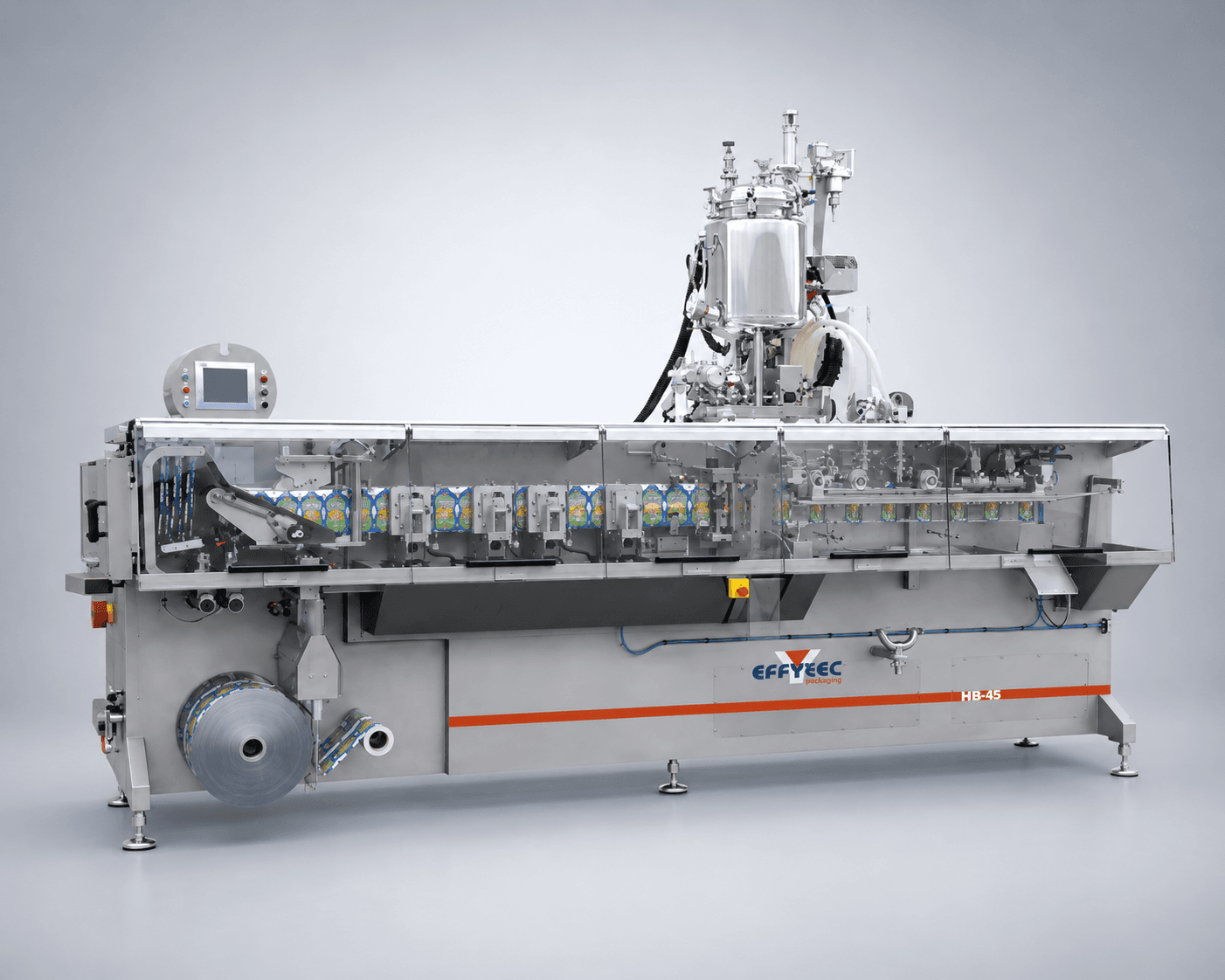
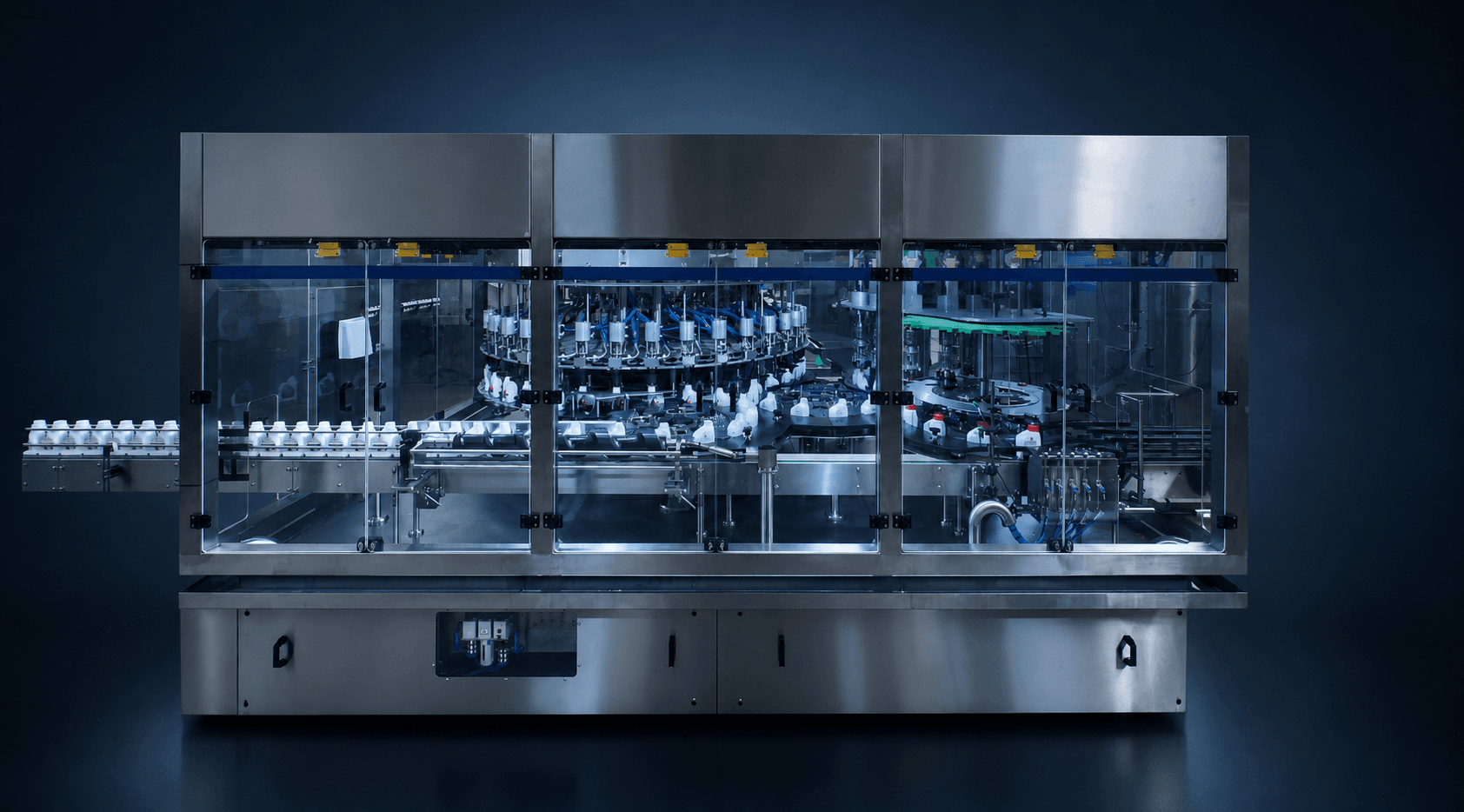
The systems referenced in this article, supplied and serviced from Ahmedabad.
Frequently asked questions
What is the most important factor when choosing a packaging machine?
Start with your product's physical behaviour — flow, viscosity, particle size and temperature — because it determines the dosing technology, and that choice cascades into every other part of the line. Lock the pack format next, then size for realistic throughput.
Should I buy a packaging machine with more speed than I currently need?
Size the machine to your realistic 18–24 month volume with sensible headroom. Buying far more speed than you need wastes capital and adds complexity; buying too little caps growth. Always compare sustained throughput on your product, not the brochure's peak rate.
Do I need a checkweigher or inspection system on a new line?
If you sell by declared weight, run high volumes, or operate in pharma, nutraceutical or export food, yes. A checkweigher controls underweight (legal risk) and overweight (giveaway), and usually pays for itself in giveaway savings. Specify inspection at the design stage so it integrates cleanly.

