
A checkweigher weighs every pack on the line and rejects any that fall outside tolerance. This guide explains how dynamic checkweighing works, why it protects both compliance and profit, the reject and certification options, and when your line needs one.
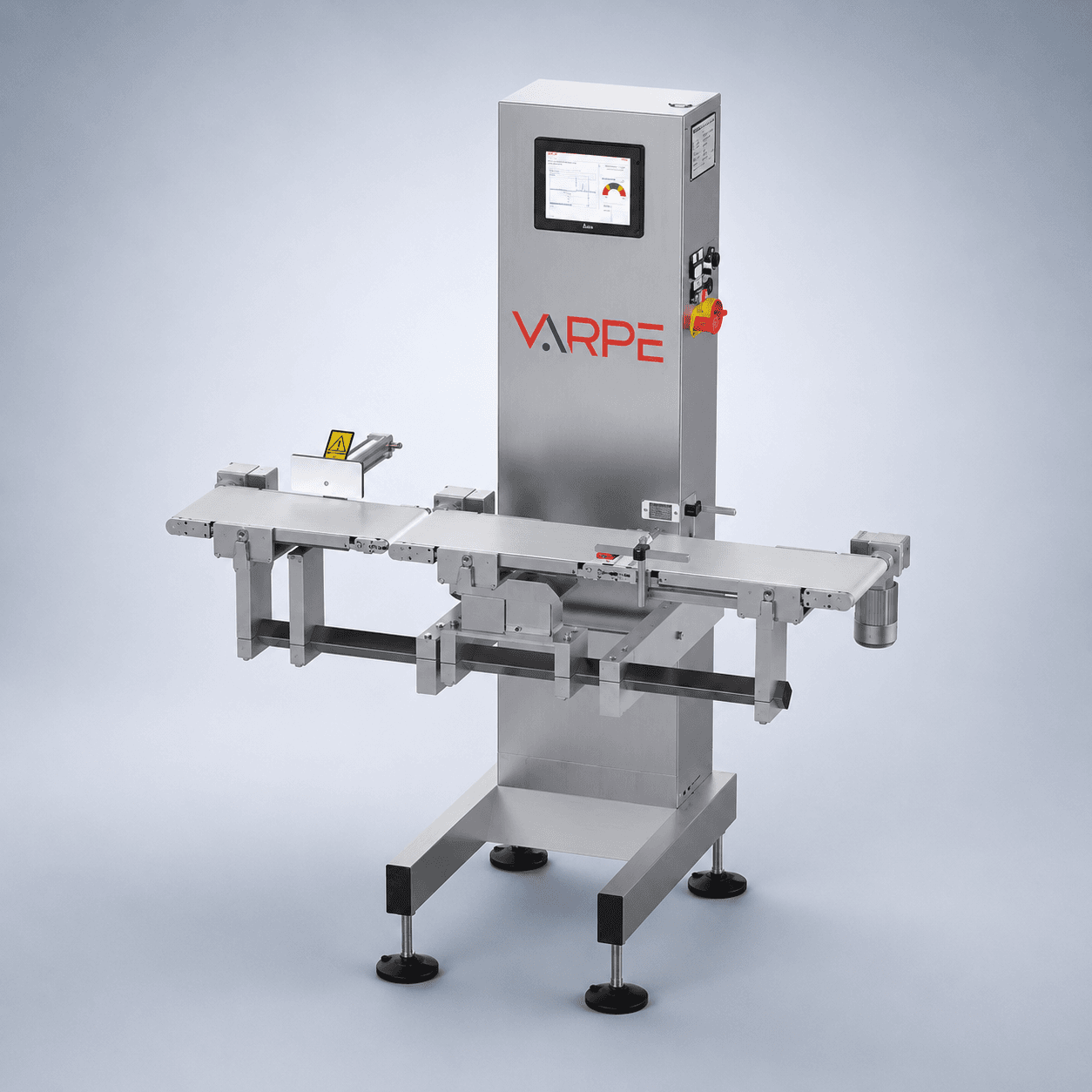
A checkweigher is an automatic inline scale that weighs every single pack as it moves along the production line and rejects any that fall outside a set weight tolerance. It is one of the simplest and most cost-effective pieces of quality-control equipment a manufacturer can install, and on high-volume lines it often pays for itself within months.
Unlike a static scale, a dynamic checkweigher captures a stable, accurate weight while the product is moving at full line speed — hundreds of packs per minute — and acts on the result in milliseconds. That combination of speed and accuracy is what makes 100% weight verification practical in modern production.
How a dynamic checkweigher works
Packs are carried over a high-speed weighing conveyor built around a precision load cell or electromagnetic force-restoration (EMFR) weigh sensor. As each pack transits the weigh belt, the system samples the weight signal, filters out vibration and belt noise, and resolves a stable value in a fraction of a second.
That value is compared against the target weight band — a minimum and maximum you configure per product. Packs inside the band continue; packs outside it trigger a reject device downstream. The system also logs every reading, giving you a continuous record of line performance, trends and giveaway for audits and process control.
Why checkweighing matters: compliance and profit
Checkweighing protects two things at once. The first is compliance. If you sell by declared weight, shipping underweight packs exposes you to legal penalties, retailer chargebacks and reputational damage. Many markets enforce average-weight or minimum-weight legislation, and a certified checkweigher gives you the documented proof of conformance regulators expect.
The second is profit, and it is the one manufacturers underestimate. Every overweight pack is free product given away. A few grams of overfill per pack sounds trivial until you multiply it by hundreds of packs a minute across every shift — at which point it becomes one of the largest controllable losses on the line. By tightening the target band, a checkweigher turns that giveaway back into margin.
Reject systems and where they fit
Out-of-spec packs are removed by a reject device matched to the product. Air-blast rejects suit light packs like sachets and pouches; pusher or paddle arms handle heavier or rigid packs; drop-flap and diverter systems route product onto a separate conveyor. The right choice depends on pack weight, speed and how the rejected product is collected.
Good reject design includes confirmation that the reject actually occurred — a bin-full sensor, a reject-confirm photocell and lockable reject bins — so that a non-conforming pack can never reach the customer. In regulated environments this validated reject chain is as important as the weighing itself.
Accuracy, certification and standards
Checkweigher accuracy depends on the weigh technology, line speed, pack weight and the stability of the conveyor and environment. As a rule, accuracy tightens as speed drops and as pack weight rises relative to the required resolution. Manufacturers should ask suppliers for a guaranteed accuracy at their specific speed and weight, demonstrated on their own product.
For trade and regulated use, look for OIML R51 and CE certification, which define the metrological requirements for automatic catchweighing instruments. Certified systems give you legally defensible documentation — important for pharma, export food and any line audited by a regulator or major retailer.
When does your line need a checkweigher?
If you sell by declared weight, operate in a regulated sector, supply major retailers, or run high enough volumes that giveaway compounds into real money, a checkweigher is usually an easy business case. It is also the natural partner to your filler: the filler aims for the target, and the checkweigher verifies it and feeds back so the filler can be tuned.
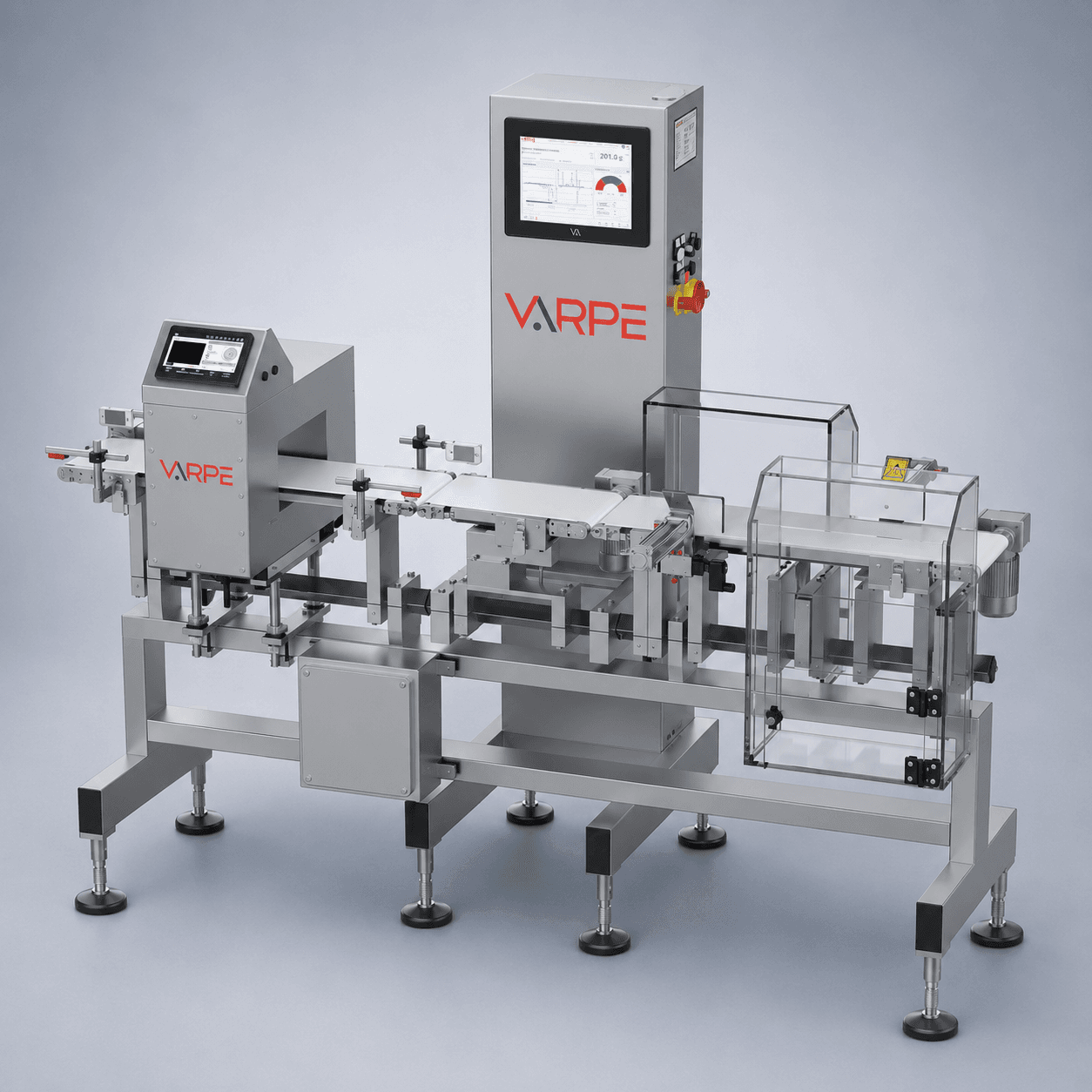
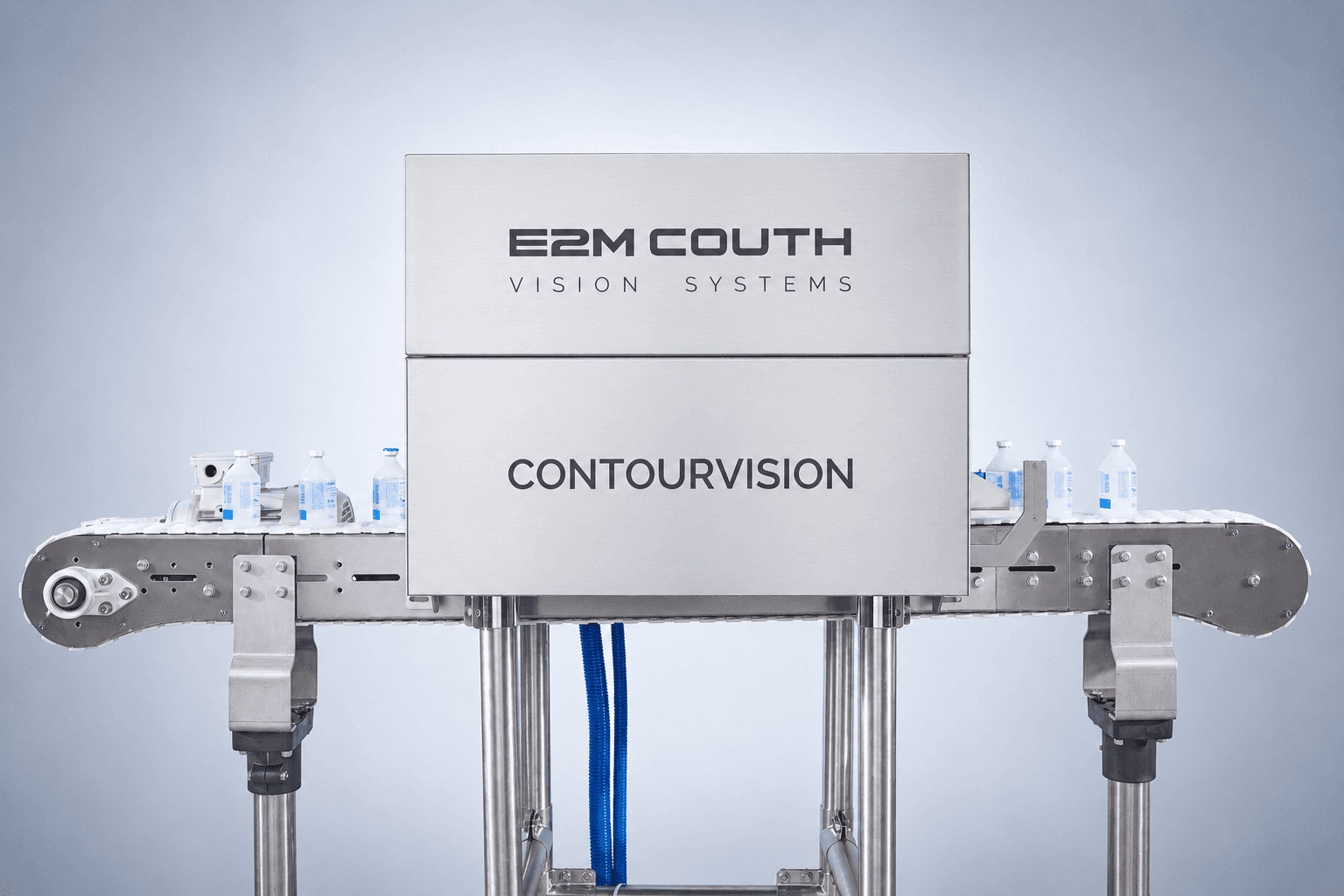
Checkweighing also pairs naturally with other inline inspection — metal detection, X-ray and vision — to form a complete end-of-line quality gate. Many manufacturers combine checkweighing with X-ray and metal detection in a single station to verify weight and screen for contaminants in one pass.
In summary
A checkweigher is a small investment that protects your licence to sell and recovers margin on every pack. If you are specifying a new line or trying to cut giveaway on an existing one, our team can recommend an OIML/CE-certified checkweigher sized to your product, speed and reject requirements.
The systems referenced in this article, supplied and serviced from Ahmedabad.
Frequently asked questions
What is a checkweigher?
A checkweigher is an automatic inline scale that weighs every pack on a production line while it is moving and automatically rejects any pack that falls outside a set minimum/maximum weight band, protecting both legal compliance and profit.
How accurate are checkweighers?
Accuracy depends on weigh technology, line speed and pack weight — it tightens at lower speeds and higher pack weights. Ask for a guaranteed accuracy at your specific speed and weight. For trade use, choose OIML R51 and CE-certified systems.
Is a checkweigher legally required?
If you sell by declared weight, many markets enforce average- or minimum-weight legislation, and a certified checkweigher provides the documented proof of conformance regulators and retailers expect. It is effectively required in pharma and export food.


